

-
Brightness Levels and Adjustability:
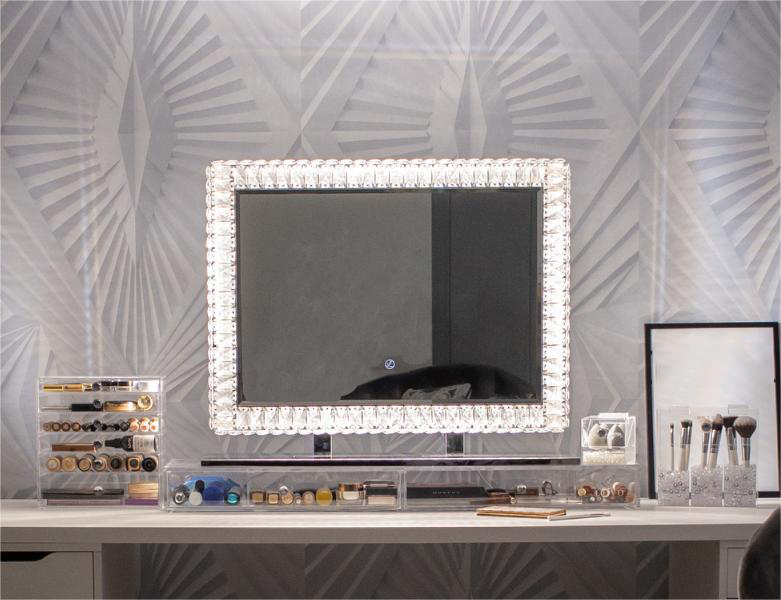
LED mirrors are designed to offer ample brightness for various tasks, including grooming and makeup application. One of the key advantages is their adjustable brightness levels. Most LED mirrors come equipped with dimming options, allowing users to tailor the illumination to their specific needs. This adjustability ensures that LED mirrors can provide both functional, task-oriented lighting and softer, ambient lighting for relaxation.
-
Color Rendering Index (CRI):
The Color Rendering Index (CRI) is a crucial factor in determining the ability of a light source to accurately represent colors. LED mirrors, with their high CRI ratings, provide natural and true-to-life color representation. This is particularly important in a bathroom setting, where accurate reflection is essential for tasks such as applying makeup or coordinating clothing.
-
Placement and Size:
The effectiveness of LED mirrors in providing sufficient light also depends on their placement and size. Consider the size of the mirror in relation to the space it illuminates. Larger mirrors or those with multiple LED strips tend to provide more even and widespread lighting. Proper placement above the vanity or sink ensures that the light is directed where it is needed the most.
-
Task-Oriented Illumination:
LED mirrors are specifically designed to cater to task-oriented illumination in the bathroom. The focused and directional nature of LED lighting allows for precise lighting where it matters most. This is particularly beneficial for tasks that require attention to detail, such as shaving or applying makeup.
-
Demister Functionality:
LED mirrors often come equipped with demister pads that prevent fogging. While not directly related to brightness, this feature ensures that the mirror remains clear even in steamy conditions, contributing to a consistently well-lit and functional space.
-
Supplemental Lighting Options:
In larger bathrooms or those with additional features like recessed lighting, LED mirrors can be complemented with supplemental lighting sources. This combination allows for a well-balanced and adequately illuminated space, ensuring that no corners are left in the dark.
-
Personal Preferences and Lighting Design:
The perceived brightness of an LED mirror can also be influenced by personal preferences and the overall lighting design of the bathroom. Some users may prefer a softer, more subdued lighting atmosphere, while others may opt for bright and invigorating illumination. The ability to customize the brightness levels of LED mirrors caters to these individual preferences.
Conclusion
In the realm of bathroom design, LED mirrors prove to be a reliable source of illumination. The key lies in understanding the features that contribute to their lighting capabilities, such as adjustable brightness, high CRI, and task-oriented design. When chosen and installed thoughtfully, LED mirrors can provide more than enough light to meet the functional and aesthetic needs of any bathroom space.
Welcome to contact us: 👇
📩Email: teli2018@126.com
📞WhatsApp/Wechat: +86 18923119142