
How to Choose the Right Kitchen Cabinets: A B2B Kitchen Cabinet Buying Guide
Choosing the right kitchen cabinets is a strategic decision in residential, commercial, and large-scale project developments. For distributors, wholesalers, interior designers, contractors, developers, and project buyers, the challenge is not simply selecting attractive products—it is understanding how to choose kitchen cabinets that can be manufactured consistently, delivered on schedule, and scaled across multiple units.
This kitchen cabinet buying guide is written specifically for B2B decision-makers. It focuses on cabinet systems, materials, production capability, quality control, and cost efficiency—key factors that directly impact project execution and long-term business performance.
1. Industry Overview: Why Cabinet Selection Impacts Project Success
In today’s global construction and renovation market, kitchen cabinets are no longer standard off-the-shelf items. Project specifications increasingly require custom dimensions, stable finishes, moisture-resistant materials, and repeatable quality across phased deliveries.
Common sourcing challenges include:
- Inconsistent quality between samples and bulk production
- Limited customization capability at scale
- Unclear or unstable production lead times
- Poor coordination between design intent and manufacturing output
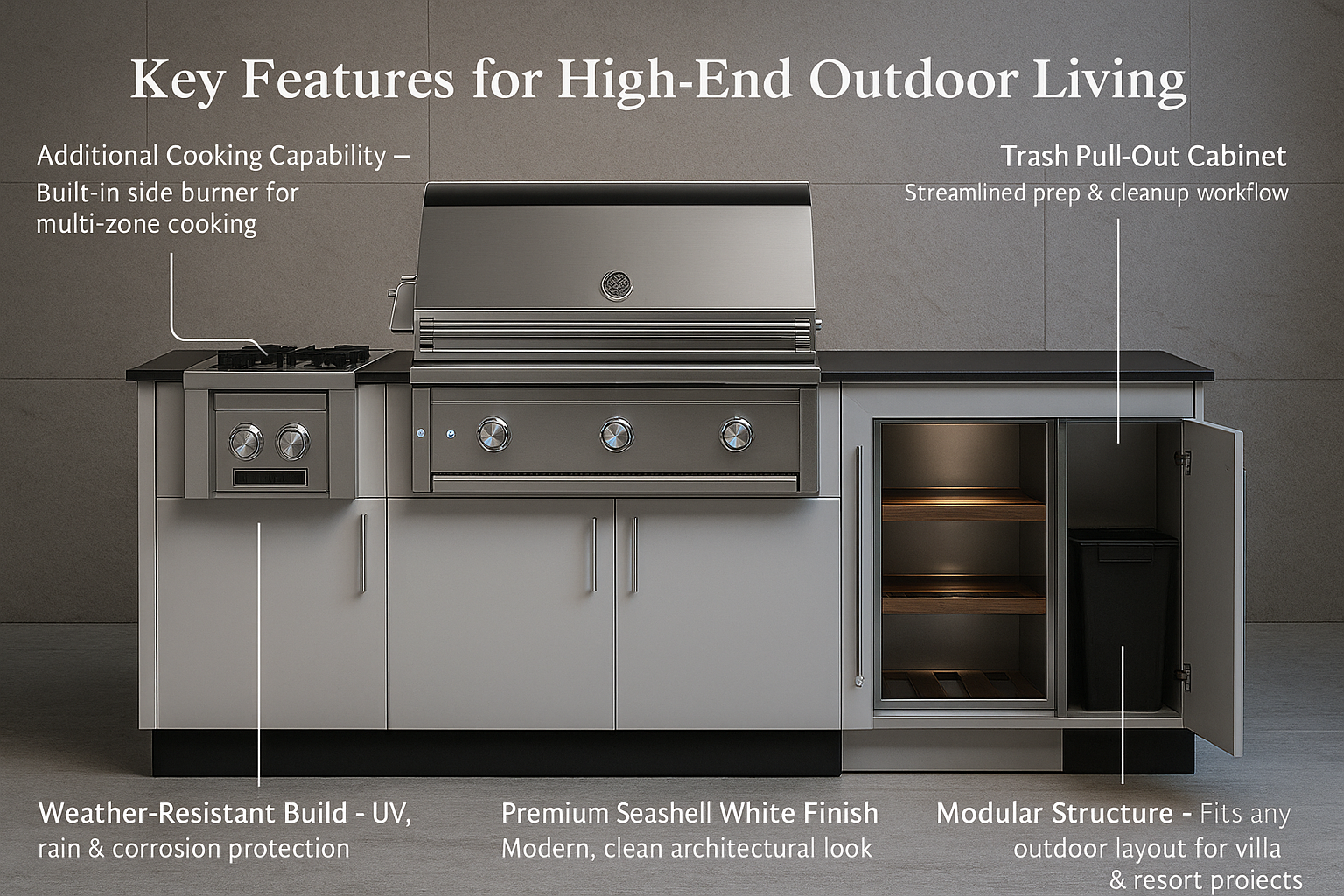
2. Types of Kitchen Cabinets for Professional Projects
When reviewing the different types of kitchen cabinets, B2B buyers should focus on structure, installation efficiency, and scalability rather than retail-style classification.
Cabinet Construction Types
| Cabinet Type | Description | Recommended Applications |
|---|---|---|
| Stock Cabinets | Pre-manufactured with fixed sizes and finishes | Budget-driven projects with minimal customization |
| Semi-Custom Cabinets | Limited size and finish flexibility | Mid-scale residential developments |
| Custom Kitchen Cabinets | Fully made-to-order in size, material, and finish | Multi-unit housing, hospitality, premium and complex projects |
For most project-based procurement, Custom Kitchen Cabinets provide the best balance between design flexibility and long-term supply stability.
3. Cabinet Materials: Performance, Durability, and Cost Control
Selecting appropriate cabinet materials is essential for durability, moisture resistance, and cost predictability—especially in large or export-oriented projects.
| Material | Key Advantages | Considerations |
|---|---|---|
| Plywood | High strength, moisture resistance, long service life | Higher cost; grade and thickness must be specified clearly |
| MDF | Smooth surface, suitable for painted finishes | Requires proper sealing for humid environments |
| Particle Board | Cost-effective for controlled indoor conditions | Limited durability in high-moisture areas |
Material selection should always align with project lifecycle expectations, local climate conditions, and maintenance requirements.
4. Cabinet Door Styles and Production Consistency
Cabinet door styles play a key role in both visual impact and manufacturing efficiency. For B2B projects, consistency and ease of reproduction are critical.
- Shaker-style doors: Widely accepted, suitable for multiple markets
- Flat-panel doors: Ideal for modern and large-volume developments
- Slab doors: Minimalist design with high production efficiency
5. Application Scenarios
Residential Projects
Apartments, villas, and multi-family housing developments prioritize cost control, standardized specifications, and fast installation.
Commercial Projects
Hotels, serviced apartments, and office pantries require durability, uniform appearance, and simplified maintenance.
Large-Scale Project Procurement
Developers and project buyers need stable supply capability, phased delivery planning, and consistent documentation—often supported by Project Cabinet Solutions.
6. Advantages for Distributors, Designers, and Contractors
- Stable product specifications for repeat orders
- Customization aligned with manufacturable standards
- Reduced on-site installation risks
- Predictable costs and delivery schedules
Long-term collaboration programs are available through our Partner / Distributor Program.
7. Quality Control and Manufacturing Capabilities
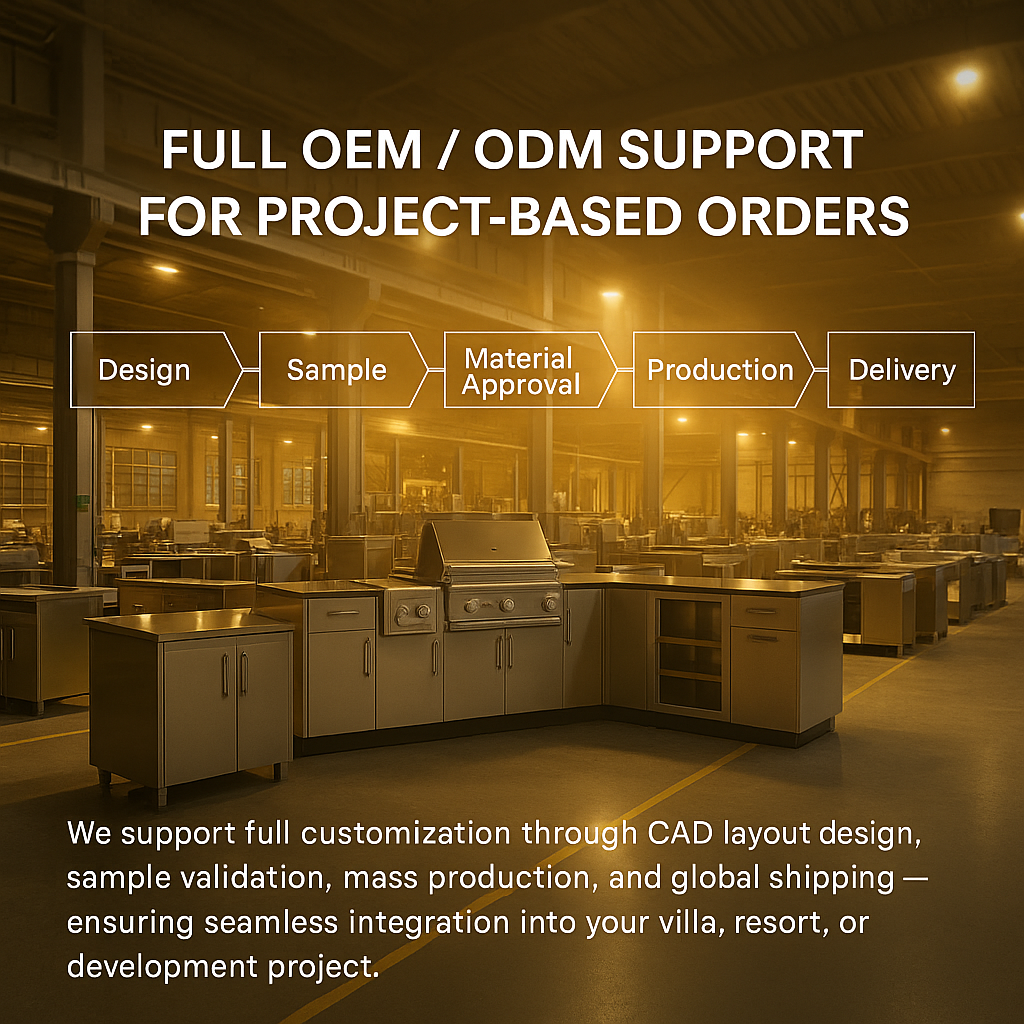
Understanding the Cabinet Manufacturing Process is essential when evaluating suppliers. Professional manufacturers implement:
- CNC cutting and drilling for dimensional accuracy
- Standardized assembly and hardware installation
- Multi-stage quality inspections
- Export-grade packaging and labeling systems
8. Cost Efficiency and Lead Time Considerations
Total project cost includes not only cabinet price, but also installation efficiency, defect rates, and delivery reliability.
Clear production planning and transparent lead times help contractors and developers maintain schedule control and protect margins.
9. Common Mistakes in Choosing Cabinet Suppliers
- Selecting suppliers based on price alone
- Ignoring scalability and batch consistency
- Overlooking quality control systems
- Failing to confirm customization limitations
Conclusion: How to Choose Kitchen Cabinets for Long-Term Success
For professional buyers, knowing how to choose kitchen cabinets means aligning product design, material selection, and manufacturing capability into one reliable supply solution.
The right cabinet partner supports scalability, quality consistency, and efficient project delivery— turning kitchen cabinet sourcing into a long-term competitive advantage.
Discuss Your Project or Bulk Cabinet Requirements
Contact us to review your drawings, specifications, and delivery schedule. We support distributors, designers, contractors, developers, and project buyers with scalable cabinet solutions.
📩 Email: teli.2008@163.com
📞 WhatsApp / WeChat: +86 189 2311 9142