
How Premium Cabinet Manufacturers Ensure Quality: A Deep Dive for Global B2B Buyers
In commercial real estate and hospitality development, cabinetry often accounts for a substantial portion of the interior fit-out budget. For importers, wholesalers, and project developers, selecting a cabinet manufacturer is not merely about finding a competitive price point. It requires a thorough understanding of how a supplier mitigates risks through systematic quality control.
A single delaminated panel or a malfunctioning hinge can derail an entire multi-family residential project, leading to costly delays and compromised brand reputations. This article examines the rigorous manufacturing workflows, material standards, and testing protocols that top-tier manufacturers employ to guarantee long-term durability and structural integrity.
The Architecture of an End-to-End Manufacturing Workflow
Reliable quality is the structural outcome of a standardized production process. Premium manufacturing facilities operate on an integrated system where every stage of production is monitored and documented. The journey begins long before raw materials reach the cutting floor, starting with strict incoming quality control (IQC) protocols.
Once raw materials pass inspection, automated precision machinery handles the cutting, edge-banding, and drilling phases. Utilizing computerized numerical control (CNC) systems minimizes human error, keeping dimensional tolerances within an acceptable variance of less than 0.5mm. This extreme precision ensures that when components move to final assembly or are flat-packed for shipping, every modular joint aligns perfectly.
Key Inspection Points in the Production Lifecycle
- In-Process Quality Control (IPQC): Real-time monitoring of moisture content and edge-banding adhesion strength during active production runs.
- Dimensional Verification: Automated CNC calibration checks to guarantee consistency across large volume contract orders.
- Pre-Shipment Inspection (PSI): Full trial assembly of random sample batches to verify structural alignment and hardware functionality before container loading.
Material Selection Standards: The Foundation of Longevity
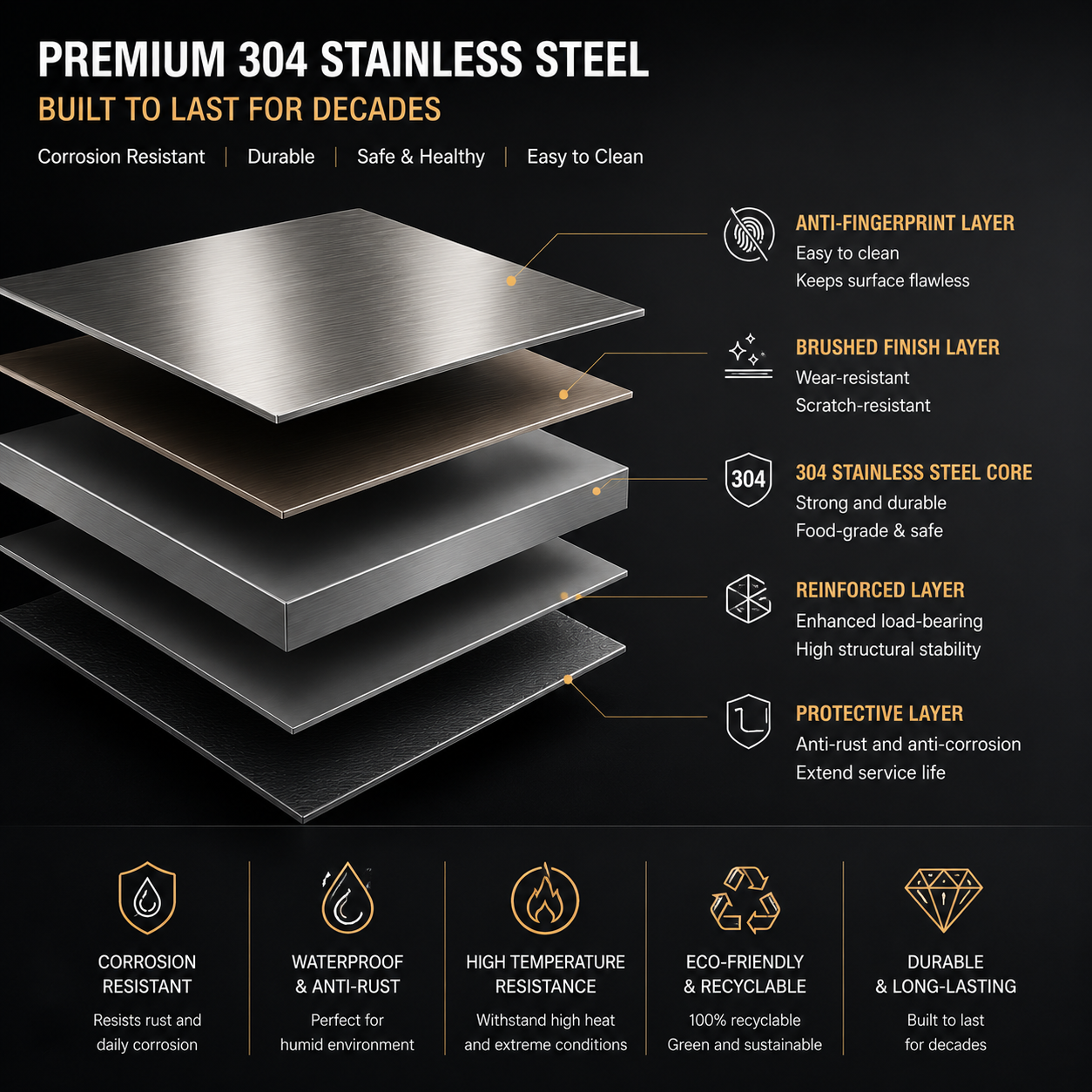
The core substrate determines how a cabinet performs under environmental stress. For high-traffic commercial projects and premium residential builds, standard particleboard is frequently replaced by high-density fiberboard (HDF), marine-grade plywood, or specialized stainless steel structures. These materials are chosen specifically for their resistance to deflection and moisture absorption.
In environments prone to humidity, such as multi-family kitchens or commercial hospitality suites, material density is critical. High-end suppliers evaluate substrates based on internal bond strength and thickness swelling rates after prolonged water immersion. Choosing a manufacturer that prioritizes these raw material metrics protects the end client from premature product failure.
For integrated design projects requiring cohesive aesthetic continuity across spaces, developers often source their storage and vanity components concurrently. Exploring a specialized bathroom vanity collection allows procurement managers to sync material specifications, ensuring that the moisture-resistance standards applied to kitchen cabinetry are maintained within adjacent wet areas.
"In commercial procurement, structural integrity is non-negotiable. A cabinet's true value is revealed over years of heavy daily use, making raw material verification the most critical step in supplier vetting."
Hardware Testing and Mechanical Endurance Protocols
A cabinet box is only as dependable as the hardware holding it together. Moving components like concealed hinges, under-mount drawer slides, and lift-up mechanisms experience the highest mechanical stress over the product lifecycle. Consequently, top-tier manufacturers partner with internationally certified hardware brands or subject their proprietary hardware to stringent mechanical testing.
Industrial testing setups evaluate hardware using specialized equipment designed to simulate decades of continuous operation. Slide mechanisms and hinges undergo rigorous cycle testing, often requiring 50,000 to 100,000 open-and-close operations under full weight loads to confirm smooth operation without structural failure.
Essential Hardware Performance Metrics
- Load Capacity: Heavy-duty drawer runners must support static loads of up to 35kg to 50kg without bowing or losing fluid motion.
- Soft-Closing Reliability: Hydraulic damping systems are tested across extreme temperature fluctuations to ensure consistent closing speeds.
- Corrosion Resistance: Hardware destined for humid climates or coastal developments undergoes extensive salt spray testing to prevent premature rusting.
Surface Finish Durability and Environmental Compliance
The exterior finish of a cabinet serves a dual purpose: defining the visual luxury of the space and protecting the underlying substrate from external damage. Whether utilizing high-gloss lacquers, premium wood veneers, or advanced thermofused laminates (TFL), the finish must withstand scratches, chemical exposure, and UV discoloration.
Simultaneously, international regulatory compliance governs global procurement. Large-scale developers and wholesalers operating in North America and Europe must adhere to strict chemical emission laws. Leading global manufacturers ensure all engineered wood products meet CARB Phase 2 or EPA TSCA Title VI certifications, maintaining formaldehyde emissions below 0.05 parts per million (ppm).
Surface Finish Performance Standards
A comparative look at how premium finishes are validated during factory testing:
- Cross-Hatch Adhesion Test: Evaluates the bonding strength of paint or lacquer to the substrate, preventing peeling under mechanical impact.
- Chemical Resistance Tracking: Exposure testing against common household chemicals, oils, and acidic liquids to ensure the surface remains unmarred.
- Scratch Hardness Testing: Utilizing specialized diamond-tip styluses to measure the resistance of the outer clear coat to daily abrasions.
How B2B Buyers Can Effectively Verify Manufacturer Quality
Evaluating a factory from across the globe requires a strategic approach. Relying solely on digital marketing materials is rarely sufficient for high-volume contract orders. Savvy procurement professionals use specific verification methods to ensure a factory can deliver consistent quality at scale.
Requesting third-party factory audit reports—such as ISO 9001:2015 certifications—provides immediate insight into a manufacturer's quality management systems. Furthermore, ordering comprehensive prototype samples allows your engineering team to verify the joinery, edge-banding seamlessness, and structural rigidity firsthand before committing to a full production run.
When executing comprehensive interior fit-outs, project managers often streamline logistics by sourcing related storage items from a single trusted partner. Incorporating matching organizational units, such as a high-specification recessed mirrored medicine cabinet, allows buyers to evaluate a factory's competence in handling complex material combinations like metal, glass, and wood simultaneously.
Frequently Asked Questions
What are the primary indicators of a high-quality cabinet construction?
The clearest indicators include precise dimensional tolerances (less than 0.5mm variance), seamless edge-banding without visible glue lines, the use of certified low-emission substrates (CARB Phase 2/EPA), and heavy-duty, soft-closing hardware rated for at least 50,000 cycles.
How do manufacturers protect cabinetry from moisture damage during transit?
Premium suppliers utilize moisture-absorbent silica gel packs within the packaging, wrap components in protective polyethylene film, and use heavy-duty corrugated cartons. For ocean freight, pallets are securely shrink-wrapped to seal out ambient humidity inside shipping containers.
Why is CARB Phase 2 compliance important for international developers?
CARB Phase 2 compliance is a legal requirement for wood products sold or installed in many major global markets, including the United States. It certifies that the formaldehyde emissions from the engineered wood substrates fall well within safe, non-toxic thresholds, protecting developers from legal liabilities.
Can a manufacturer accommodate custom OEM/ODM specifications for large architectural projects?
Yes, established commercial manufacturers operate dedicated OEM/ODM divisions. They utilize advanced CNC programming to adapt structural designs, material types, and dimensions to meet the precise architectural blueprints and budgetary frameworks of large-scale projects.
Get in Touch for Bulk Orders & Project Support
Looking for a reliable supplier of bathroom and kitchen products?
At Bergoto, we provide premium solutions for wholesalers, distributors, contractors, and project buyers worldwide.
- Competitive factory pricing
- OEM & ODM support
- Stable supply for large-scale projects
📩 Email: teli@bergoto.com
📞 WhatsApp/WeChat: +86 18923119142
Our team will respond within 24 hours.