
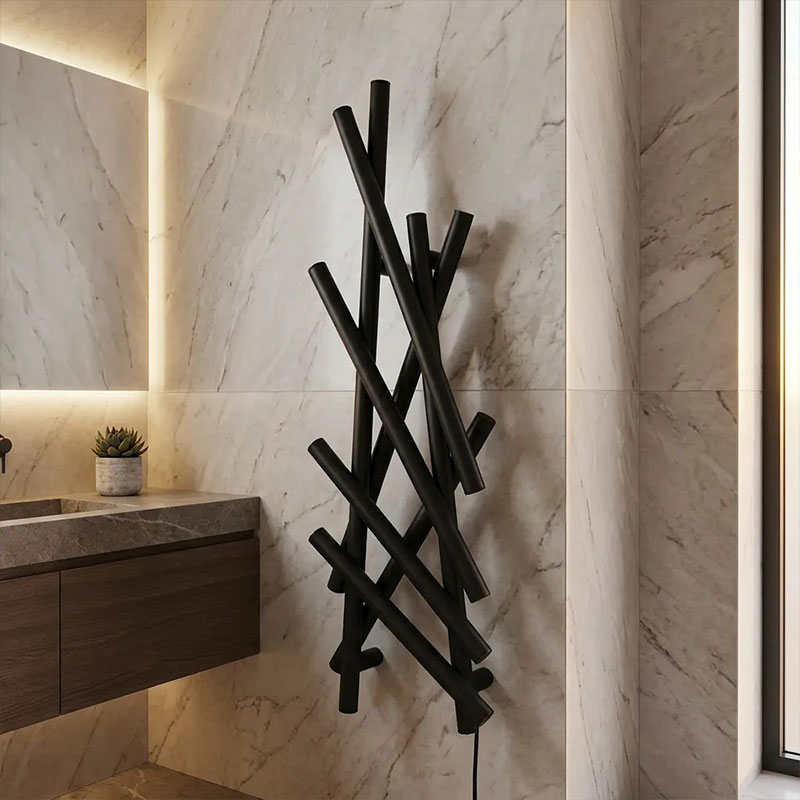
Do Electric Towel Warmers Waste Electricity? The Truth About Commercial Energy Consumption
For global property developers, high-end hospitality procurement managers, and architectural specifiers, balancing guest comfort with predictable operational costs is a continuous challenge. As green building certifications like LEED and BREEAM become standard requirements for luxury commercial and residential projects, every specified electrical fixture must undergo strict efficiency vetting. The bathroom, which serves as a central hub for guest experience, is a primary focus for these calculations.
Among modern bathroom fixtures, the electric heated rail is a sought-after addition because of its ability to maintain a dry, premium micro-environment. However, a recurring concern frequently surfaces during the procurement phase: do electric towel warmers waste excessive amounts of electricity? Misunderstandings regarding the energy profile of these units can lead to hesitation during specification, which can impact the overall value of an interior project. Addressing this concern requires a look at the actual thermal mechanics and energy data that govern commercial-grade systems.
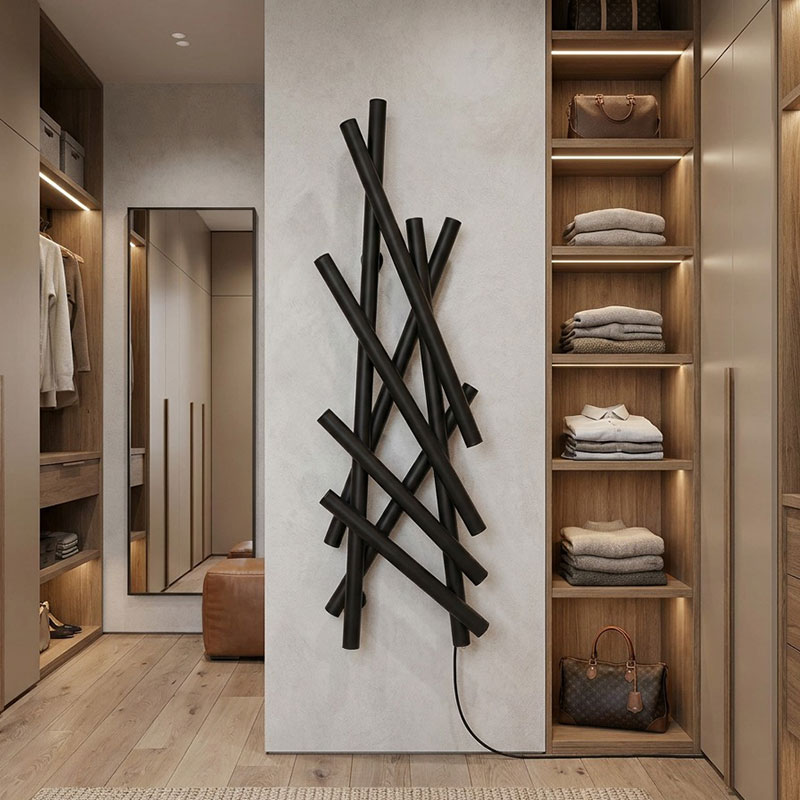
Deconstructing the Consumption Myth: The Real Energy Profile
The assumption that heating fixtures are naturally inefficient often comes from confusing a towel warmer with a space heater. Space heaters require thousands of watts to warm large volumes of moving air, whereas an electric drying rail operates within a restricted thermal footprint designed specifically for contact-based heat transfer.
A typical commercial-grade towel warmer operates within a modest power range of 60 to 120 watts. To put this into perspective for a hotel or multi-family residential building, this power draw is comparable to a standard traditional light bulb or a desktop monitor. It is a stable, low-amperage draw that does not create the electrical peaks associated with heavy appliance loads.
A common misunderstanding among project buyers involves the difference between continuous and intermittent operation. While a unit may remain mounted to the wall indefinitely, its internal components do not draw maximum wattage continuously. Once the system reaches its regulated temperature, the actual power usage drops significantly to maintain that thermal equilibrium, making the total kilowatt-hour footprint far smaller than initial calculations might suggest.
Three Energy Optimization Technologies in Modern Fixtures
To ensure a project meets modern sustainability goals, procurement teams must look past basic on-off switches. Leading international manufacturers now incorporate advanced electrical engineering to minimize energy waste in high-traffic settings.
1. Pulse-Width Modulation Heating Control
Rather than running at full power until a thermostat switches off, modern rapid-heating rails utilize Pulse-Width Modulation (PWM) control systems. This technology sends precise, rapid pulses of electrical energy to the heating elements, adjusting the power cycle in real time based on current fabric moisture and ambient room conditions. This approach prevents thermal overshoot, keeping energy consumption closely aligned with actual drying needs.
2. Residual Heat Utilization Architecture
High-quality engineering prioritizes materials that retain heat effectively even after the power cycle ends. Advanced dry-wire setups combined with dense metallic frames create high thermal retention. Once the unit completes its high-output drying phase, the system can shut down early, allowing residual heat stored within the frame to finish the evaporation process without drawing further power from the grid.
3. Integrated Scheduling and Presence Automation
The most effective way to save energy is to ensure the fixture only runs when needed. Modern B2B specifications require hardware that integrates directly with automated hospitality management systems or digital timers. This setup ensures the warming cycles align with peak usage hours, preventing units from running in empty rooms while ensuring warm towels are available exactly when needed.
"In large-scale commercial hospitality, efficiency is not determined by limiting the utility of an amenity. True efficiency is achieved by applying smart control systems that deliver comfort exactly when needed while eliminating background waste."

Calculating the Financial Impact: Real-World Operational Costs
For financial planners and project specifiers, translating wattage into operational costs is essential for accurate forecasting. While regional utility rates vary, examining average commercial energy data provides a clear picture of the ongoing costs associated with these fixtures.
Assuming a standard utility cost of $0.15 per kilowatt-hour, an optimized 100-watt drying rail operating on a controlled four-hour daily cycle consumes roughly 0.4 kilowatt-hours per day. This equates to a predictable operational cost of approximately $1.80 to $2.40 per month per room. Even in heavy-use hospitality suites where units run for eight hours a day, the monthly expense remains manageable, usually ranging from $3.60 to $4.80 per unit.
This data demonstrates that the ongoing cost of these systems is a predictable, manageable expense. When balanced against the benefits of reduced commercial laundry cycles, lower ambient bathroom moisture, and protection for high-end wall finishes, the investment yields a positive operational return.
Sourcing Framework: Material Performance and Thermal Efficiency
Achieving optimal energy efficiency requires selecting the right material platform for your project. The overview below highlights how common manufacturing materials handle heat transfer and retention:
- High-Conductivity Aluminum Alloys: These materials provide rapid thermal response times, heating up almost immediately upon activation. They minimize preheating times, making them an excellent choice for properties that rely on on-demand, intermittent usage.
- Marine-Grade Stainless Steel (SUS 304): Known for exceptional structural durability and excellent, steady heat retention. Specifying a premium spa towel bar built from high-density stainless steel ensures a stable, uniform temperature across all rails, making it ideal for continuous operational environments.
- Low-Carbon Mild Steel: While offering a lower initial purchase price, mild steel features lower overall thermal transfer rates. This can lead to longer heating cycles and higher energy consumption over the lifecycle of a large property development.
Seamless Integration Within the Luxury Bathroom Footprint
From an architectural standpoint, an efficient heated rail should work in tandem with the broader layout of the room. Its positioning should complement both ventilation paths and surrounding high-end cabinetry to maximize spatial utility and moisture control.
For example, installing a heavy-duty hotel style towel rack featuring integrated top shelving allows properties to store dry linen safely while using active lower elements for drying. When placed alongside a premium floating bathroom vanity assembly, this layout creates a unified, highly functional space that enhances air movement, controls humidity, and preserves the premium aesthetic of the interior architecture.
Frequently Asked Questions
Does leaving a towel warmer on continuously waste more electricity than turning it on and off manually?
Not necessarily. Traditional fluid-filled models require significant energy and time to reach operating temperature from a cold start. In high-traffic commercial settings, maintaining a steady, regulated temperature can use less energy than repeatedly warming a high-mass system from a complete shutdown. For intermittent use, modern dry-wire systems are recommended due to their rapid heating capabilities.
How do electric towel rails help lower overall laundry and operational costs for hotels?
By keeping bath sheets dry and fresh between uses, heated rails significantly reduce the frequency of full laundry cycles required during a multi-day guest stay. This reduction in laundry volume lowers hot water, chemical, and energy consumption in the building's central utility facilities.
Can these fixtures be specified for energy-restricted green building certifications?
Yes. By specifying low-wattage options (60 to 90 watts) that feature advanced internal microprocessors, smart timers, or automated shut-off systems, project managers can easily integrate these fixtures into buildings designed to meet strict environmental and energy compliance standards.
Get in Touch for Bulk Orders & Project Support
Looking for a reliable supplier of bathroom and kitchen products?
At Bergoto, we provide premium solutions for wholesalers, distributors, contractors, and project buyers worldwide.
- Competitive factory pricing
- OEM & ODM support
- Stable supply for large-scale projects
📩 Email: teli@bergoto.com
📞 WhatsApp/WeChat: +86 18923119142
Our team will respond within 24 hours.