
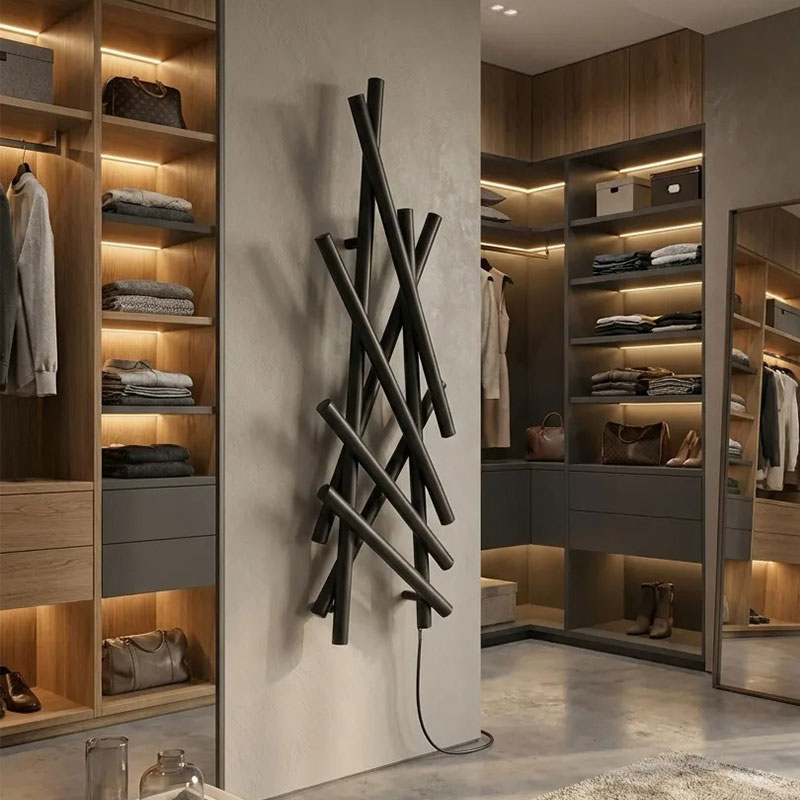
Electric Towel Warmers Explained: 5 Core Sourcing Challenges and System-Level Solutions
For international property developers, luxury hospitality procurement managers, and high-end sanitary ware distributors, specifying bathroom fixtures involves a careful balance between refined aesthetics and reliable operational performance. In premium commercial and residential projects, the choice of hardware directly influences guest satisfaction and long-term asset value. The electric heated rail has become a highly sought-after amenity, specified to create a dry, comfortable micro-environment within modern suites.
However, a significant gap often exists between product design and real-world performance. Many procurement teams face post-installation complaints regarding slow drying times, uneven heating, and premature component failures. When a luxury fixture fails to perform under daily use, it ceases to be a premium amenity and becomes a liability for the property manager. Resolving these challenges requires moving away from basic retail metrics and adopting a comprehensive, system-level approach to bathroom hardware.
1. Weak Heating Performance: The "Warm But Damp" Dilemma
The most common complaint from hospitality guests and luxury homeowners is that standard electric rails only heat the narrow bands of fabric in direct contact with the metal. The rest of the towel remains damp, creating a breeding ground for musty odors and bacteria. This performance gap leaves users feeling that the product is ineffective or underpowered.
This issue stems from a lack of true drying capability. Many low-tier models rely on fixed, low-wattage elements (often 40 to 60 watts) encased in low-conductivity metals. Because international safety standards impose a strict surface temperature ceiling—typically capping exposed fixtures between 40°C and 55°C to prevent accidental skin burns—manufacturers cannot simply raise the temperature. Instead, engineering teams must optimize internal thermal transfer using high-conductivity materials to ensure uniform heat distribution across the entire frame.
2. Low Capacity: The Bottleneck in Multi-Occupant Spaces
Boutique hotels and luxury multi-family apartments regularly accommodate multiple occupants per suite, yet conventional towel rails feature highly restrictive layouts. A single-bar or narrow multi-tier rack cannot effectively dry several large, high-density bath sheets simultaneously. When multiple towels are layered or crowded onto a small rack, airflow is completely cut off.
This structural limitation creates immediate congestion during morning and evening routines. This issue arises because standard products are built using a single-user mindset that overlooks the volume of textiles used in a shared space. To prevent this performance bottleneck, project specifiers should demand multi-rail configurations with deep horizontal projections and integrated shelving. This design allows ambient air to circulate freely alongside structural heat, ensuring the system can handle heavy textiles efficiently.
3. The Preheating Requirement: A Broken Real-Time Experience
A luxury amenity should provide immediate utility, but traditional fluid-filled electric warmers require 30 to 40 minutes to reach functional drying temperatures. In a commercial environment, guests expect immediate performance. If a fixture requires manual activation long before use, the user experience breaks down, as most occupants forget to turn the unit on before stepping into a shower suite.
This cold-start frustration shifts the product from a convenient luxury to an appliance that requires advance planning. The root cause is the high thermal inertia of legacy heating mediums, which require significant time and energy to transfer heat to the exterior chassis. Modern commercial specifications avoid this issue by prioritizing rapid-heating dry-wire elements that achieve thermal equilibrium within minutes, keeping the fixture aligned with natural user workflows.
"True luxury in modern architecture is defined by seamless, intuitive performance. If a structural bathroom fixture requires conscious planning or advanced scheduling from the end-user to function correctly, it represents an engineering oversight rather than a premium amenity."
4. Reliability Issues: Inconsistent Performance and Short Lifespans
High-moisture bathroom environments accelerate the degradation of inferior components. Budget-driven manufacturers frequently utilize low-cost heating elements paired with single-layer thermostat systems. Within months of continuous exposure to high humidity and commercial cleaning agents, these internal systems can become unstable, leading to localized burnout or complete electrical failure.
For high-traffic commercial projects, this lack of structural durability results in high product replacement costs and negative guest reviews. Sourcing premium equipment requires specifying robust internal insulation and dual-layer safety thermostats. Utilizing advanced engineering platforms ensures the heating elements remain completely protected from moisture ingress, reducing long-term maintenance requests for property developers.
5. Energy Consumption Anxiety: Managing Long-Term Utility Costs
When engineering teams attempt to fix weak drying performance by simply increasing raw wattage without upgrading the internal architecture, they create a secondary problem: high energy consumption. For an international resort or a high-rise residential development with hundreds of bathrooms, inefficient fixtures can significantly increase fixed operational overhead.
This lack of energy visibility can cause property managers to turn the systems off entirely, leaving a expensive specified asset completely underutilized. Modern B2B heating solutions address this concern by incorporating smart power management systems, such as self-regulating alloys and intelligent internal thermostats. These components automatically lower their power consumption once the system reaches its target temperature, optimizing energy use over the lifecycle of the building.
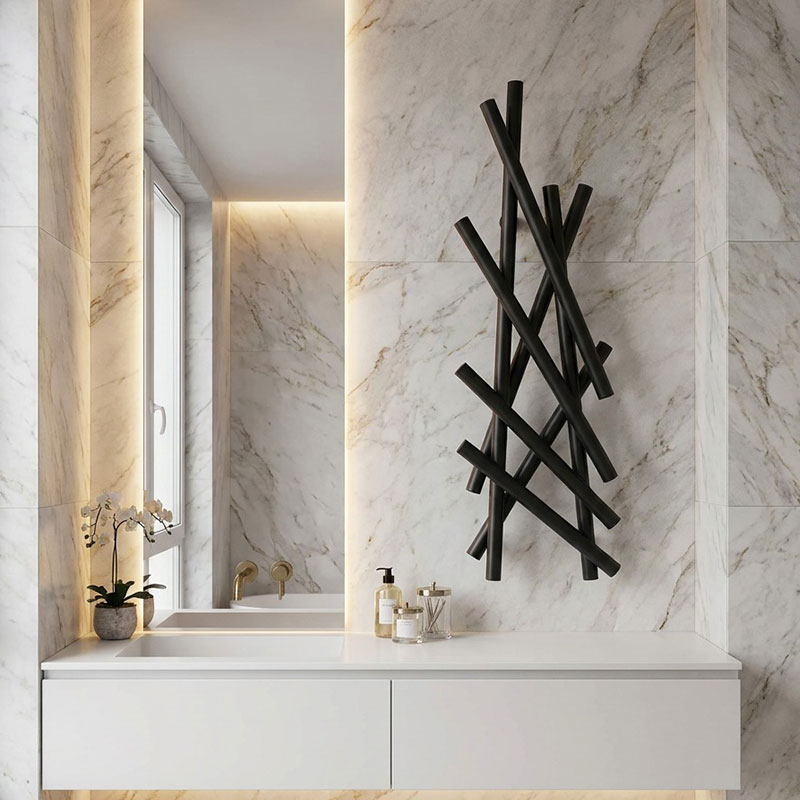
The Root Cause: A Misaligned Product Design Philosophy
The widespread dissatisfaction with standard towel warmers comes down to a fundamental design flaw: many factories treat the electric towel rail as an isolated heating device rather than an integrated component of the bathroom micro-environment. This traditional approach overlooks three essential system capabilities required for high-end commercial projects:
- Thermal Efficiency Optimization: Utilizing advanced heat transfer paths rather than relying solely on high wattage consumption.
- Multi-User Adaptability: Designing scalable layouts that can accommodate heavy, consecutive textile loads without reducing drying speeds.
- Intelligent, Behavior-Based Control: Incorporating automation and rapid response times to eliminate the need for manual preheating.
When procurement teams select hardware based on low production costs instead of real-world environmental dynamics, the final installation frequently underperforms, failing to meet the standards of luxury developments.
The System-Level Solution: Material Sourcing Guide
Overcoming these engineering limitations requires selecting the right material platform during the project planning phase. The framework below outlines the performance profiles of common industry materials to support informed sourcing decisions:
- Marine-Grade Stainless Steel (SUS 304/316): Offers exceptional corrosion resistance and excellent, steady heat retention. Specifying a high-density spa towel bar ensures long-term structural durability and uniform temperature distribution across all bars, making it ideal for luxury hospitality projects.
- High-Conductivity Aluminum Alloys: Provides rapid thermal response times and lightweight profiles. These materials heat up almost immediately upon activation, which significantly reduces preheating windows for intermittent, on-demand use.
- Low-Carbon Mild Steel: Features low initial manufacturing costs but relies completely on external powder coatings or chrome plating. It is highly vulnerable to subsurface rust if the protective coating is scratched during daily cleaning operations.
Strategic Layout Integration in Premium Bathrooms
For international design specifiers, optimizing an electric towel warmer requires evaluating how the fixture integrates with the broader room layout. Its physical placement should complement natural ventilation paths and align with storage configurations to maximize space and efficiency.
Pairing an advanced heating rail with a specialized hotel style towel rack featuring integrated top shelving allows properties to store clean linen safely while utilizing the lower elements for active drying. When positioned alongside a premium floating luxury bathroom vanity cabinet, this unified setup maximizes air movement, manages humidity, and preserves the refined aesthetic of the interior architecture.
Frequently Asked Questions
Why does raw wattage fail to guarantee fast towel drying times?
Raw wattage only indicates total energy consumption, not thermal efficiency. If a fixture is constructed from metals with poor thermal conductivity, the energy is trapped within the core instead of radiating evenly across the outer rails where it can reach the fabric.
How do dry-wire heating systems reduce building operational costs compared to fluid-filled models?
Dry-wire heating platforms reach target temperatures within 5 to 10 minutes, allowing properties to operate the fixtures intermittently on demand. By avoiding the long preheating periods of fluid-filled models, buildings can significantly reduce total kilowatt-hour consumption over the lifecycle of the project.
What structural options are best for high-traffic family or multi-user bathrooms?
Specifications should focus on multi-rail designs crafted from marine-grade stainless steel (SUS 304) that feature deep horizontal projections or integrated top shelves. This structural geometry ensures proper air circulation around multiple garments, preventing moisture buildup and keeping drying times consistent.
Get in Touch for Bulk Orders & Project Support
Looking for a reliable supplier of bathroom and kitchen products?
At Bergoto, we provide premium solutions for wholesalers, distributors, contractors, and project buyers worldwide.
- Competitive factory pricing
- OEM & ODM support
- Stable supply for large-scale projects
📩 Email: teli@bergoto.com
📞 WhatsApp/WeChat: +86 18923119142
Our team will respond within 24 hours.